AnTuTu benchmark, fastest Android phone 2026, Snapdragon 8 Elite Gen 5, AnTuTu ranking, iQOO 15 Ultra, best performing Android phone, Dimensity 9500
Benchmarks / Leave a Comment
For the first time in AnTuTu benchmark history, every single phone in the flagship top 10 has crossed 3.7 million points. The iQOO 15 Ultra just dethroned the Red Magic 11 Pro+ after a four month reign. And Snapdragon 8 Elite Gen 5 owns 9 of the 10 spots. Here is the full verified AnTuTu ranking for February 2026.
The New Number One: iQOO 15 Ultra Takes the Crown
After four months of the Red Magic 11 Pro+ sitting unchallenged at the top of every AnTuTu benchmark chart, there is finally a new king. The iQOO 15 Ultra has claimed the number one spot on the flagship list, ending the recent streak of the Red Magic 11 Pro+.
The Snapdragon 8 Elite Gen 5 equipped iQOO 15 Ultra topped the list with an average score of 4,208,894. That is roughly 100,000 points ahead of the second place Red Magic. The iQOO 15 Ultra is a gaming flagship with a powerful cooling system, 7,400 mAh battery, and 144Hz screen.
Equipped with the Snapdragon 8 Elite Gen 5 and an active cooling system (built in fan), it maintains peak performance even during extended gaming sessions.

That active fan is the difference maker. Both phones run the same chipset, but the iQOO’s cooling keeps the chip running at higher sustained clocks for longer, which is exactly what the AnTuTu benchmark measures over its multi minute test cycle.
The Full February 2026 AnTuTu Top 10 Flagship Ranking
Here is the complete verified list, sourced directly from AnTuTu V11 data collected between February 1 and February 28, 2026. The published score reflects the average of all benchmark results recorded for each model during the month, not the single highest score a device may achieve.
| Rank | Phone | Chipset | RAM + Storage | Average Score |
|---|---|---|---|---|
| 1 | iQOO 15 Ultra | Snapdragon 8 Elite Gen 5 | 16GB + 1TB | 4,208,894 |
| 2 | Red Magic 11 Pro+ | Snapdragon 8 Elite Gen 5 | 24GB + 1TB | 4,165,081 |
| 3 | Vivo X300 Pro (Satellite Ed.) | Dimensity 9500 | 16GB + 1TB | 4,084,334 |
| 4 | Realme GT 8 Pro | Snapdragon 8 Elite Gen 5 | 16GB + 1TB | 4,049,826 |
| 5 | iQOO 15 | Snapdragon 8 Elite Gen 5 | 16GB + 1TB | 3,913,382 |
| 6 | Honor Magic 8 Pro | Snapdragon 8 Elite Gen 5 | 16GB + 1TB | 3,893,423 |
| 7 | Honor Magic 8 | Snapdragon 8 Elite Gen 5 | 16GB + 512GB | 3,860,209 |
| 8 | OnePlus 15 | Snapdragon 8 Elite Gen 5 | 16GB + 1TB | 3,839,169 |
| 9 | Honor WIN | Snapdragon 8 Elite Gen 5 | 16GB + 1TB | 3,828,160 |
| 10 | Redmi K90 Pro Max | Snapdragon 8 Elite Gen 5 | 16GB + 512GB | 3,789,514 |
Data source: AnTuTu V11, February 1 to February 28, 2026
Every score is an average, not a peak. That is an important distinction.

Snapdragon 8 Elite Gen 5 Dominates: 9 Out of 10 Spots
The story of the February AnTuTu benchmark ranking is not just who won first place. It is how completely one chipset took over the entire leaderboard.
The entire top ten is powered by just two cutting edge chips: Snapdragon 8 Elite Gen 5 and MediaTek Dimensity 9500.
But “two chips” is generous. Only one phone uses MediaTek’s Dimensity 9500: the Vivo X300 Pro Satellite Communication Edition in third place. The other nine are all Snapdragon 8 Elite Gen 5.
The widespread adoption of this chipset has normalized scores exceeding the 4 million point mark across various brands.

This consistency indicates that the Snapdragon 8 Elite Gen 5 has reached a level of maturity where high end performance is now stable across diverse manufacturing platforms.
What this means practically: whether you buy a Realme, Honor, OnePlus, iQOO, or Redmi flagship in 2026, you are getting nearly identical raw performance. The gap between first and tenth is only about 419,000 points, which is roughly 10%.
The One MediaTek Phone That Kept Up
The Vivo X300 Pro Satellite Communication Edition deserves its own mention.
The third position is taken by the only smartphone in the top 10 with a MediaTek Dimensity 9500 processor, the Vivo X300 Pro Satellite Communication Edition with 4,084,334 points.
That score puts it ahead of six Snapdragon 8 Elite Gen 5 phones. Notably, it is powered by MediaTek’s Dimensity 9500, showing that MediaTek’s flagship processor can directly challenge Qualcomm at the highest level.

MediaTek’s Dimensity 9500 was announced in September 2025 and uses a 3nm TSMC process. The fact that a single MediaTek phone can compete in the top three against a field of nine Qualcomm devices is significant for the broader chipset war in 2026.
Where Are Samsung, Google, and Xiaomi’s Flagships?
This is the question that stands out when you look at the list.
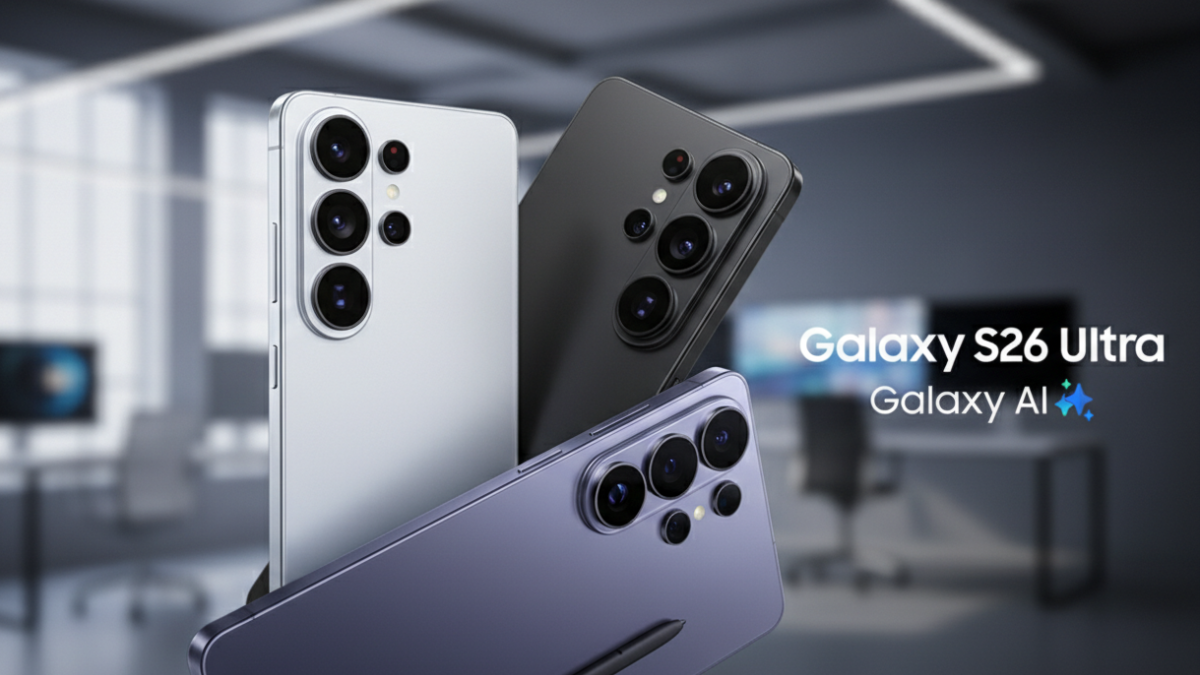
The Samsung Galaxy S26 Ultra, Google Pixel 10 Pro, and Xiaomi 17 Ultra are all absent from the top 10. None of them appear.
Samsung’s Exynos 2600 (used in some Galaxy S26 markets) and the Snapdragon 8 Elite Gen 5 for Galaxy variant (used in the S26 Ultra) both have different thermal profiles and optimization compared to the gaming focused phones on this list.
Other flagship chips (such as Apple’s A19 Pro or Samsung’s Exynos 2600) did not appear in February’s ranking, either because their benchmark scores are lower in AnTuTu’s database or because there have not yet been enough submitted test results.
The Google Pixel 10 Pro with its Tensor G5 chip has never competed on raw performance. And the Xiaomi 17 Ultra launched after the February data cutoff.
This does not mean those phones are slow. It means the AnTuTu benchmark flagship chart is currently a contest between phones that are built specifically for sustained peak performance, which is a very different thing from everyday speed.
What Changed from January to February 2026
The shifts between the two months tell a clear story.
For the past couple of months, Red Magic 11 Pro+ has been securing the top spot on AnTuTu’s monthly benchmark performance ranking. However, even though its score has improved a little, iQOO 15 Ultra has now taken the first spot.
The Redmi K90 Pro Max slipped to tenth place in February, and the standard Vivo X300, which was tenth in January, is no longer in the top ten.
The OnePlus 15 entered the list at eighth place, pushing some January entries down or off the chart entirely.
Honor made the strongest overall showing. Honor has the most models in the top 10, including the Magic 8, Magic 8 Pro, and Honor WIN models.

Three Honor phones in a single top 10. That is a statement about how well Honor has optimized the Snapdragon 8 Elite Gen 5 across different product lines.
Do These Numbers Actually Matter in Real Life?
Let me be honest about this. I have tested multiple phones from this list at Global Tech Press, and here is what the numbers do and do not tell you.
These are currently the most powerful Android smartphones available, and in everyday use, the differences between them are minimal.
In real world use, the difference between 4.2 million and 3.78 million points is noticeable mainly in the most demanding games and sustained multitasking scenarios.
For everyday tasks like photography, video, and general use, the performance gap is minimal.
The AnTuTu benchmark measures peak synthetic performance under controlled conditions. It tests CPU, GPU, memory speed, and UX responsiveness in a structured way. It is important to note that these rankings are based on synthetic benchmark scores and positions can change frequently from month to month.

Various factors such as software optimisation, system updates, and device testing conditions can influence benchmark results, meaning the leaderboard may shift regularly.
If you are a competitive mobile gamer or someone who pushes sustained workloads (video editing, emulation, heavy multitasking), these numbers give you a reliable comparison point.
If you are buying a phone for everyday use, the difference between first place and tenth place on this chart will not change your experience in any meaningful way.
What to Watch for in the March 2026 Ranking
The March AnTuTu benchmark chart should be even more interesting.
The Samsung Galaxy S26 Ultra launched on March 11, 2026, and will start accumulating test data from millions of users. The Xiaomi 17 Ultra will also enter the picture. And the Realme GT 8 Pro with its current fourth place standing may rise or fall depending on software updates.
The big question: can any non gaming phone break into the top three, or will active cooling fans continue to be the deciding factor?
We will cover the March ranking the moment AnTuTu publishes it. For now, the February 2026 leaderboard tells a clear story: if you want the fastest Android phone on paper, the iQOO 15 Ultra is where it stands. But in practice, any Snapdragon 8 Elite Gen 5 phone will give you more performance than most people will ever use.


Written by Ameer Hamza
Tech Analyst and Founder of Global Tech Press. Currently expanding the GTP hardware testing labs and building the next generation of digital tech media.